LiPo batteries for combat robots: how to choose, charge and store them safely
How to pick a 2S LiPo for an antweight robot (capacity, C rating, connector), how to charge it within the CCRL rules and how to store it so it lasts a whole season.
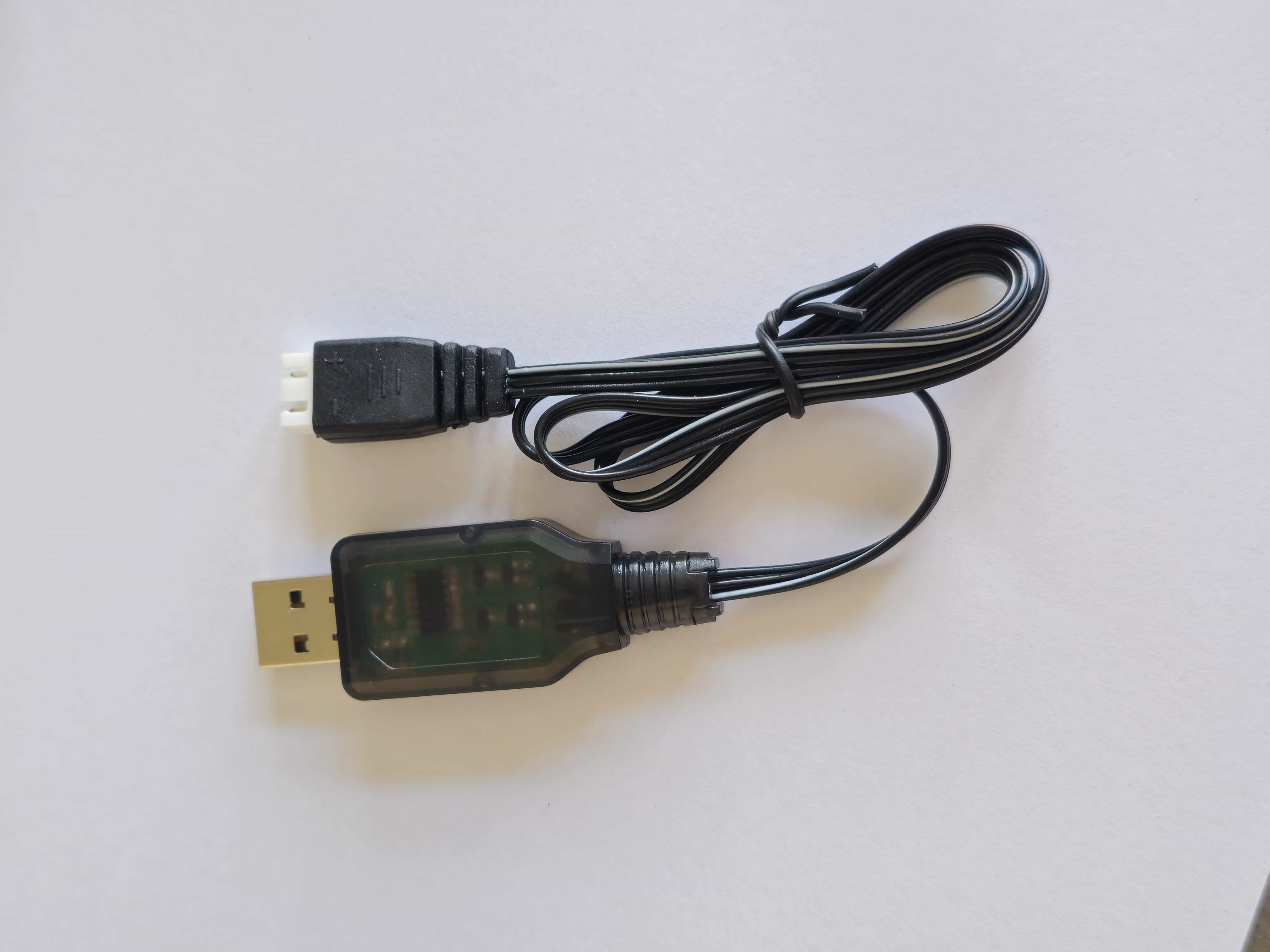
Short answer: an antweight robot takes a 2S LiPo of 250–450 mAh with a discharge rating of at least 25C and a JST PH 2.0 connector. Charge it with a balance charger, under supervision and inside a safety bag, store it at 3.8 V per cell and never discharge it below 3.0 V per cell. We do not sell the batteries themselves, but we stock everything around them – charger, tester, bag, connectors and wires.
Why LiPo and not NiMH or Li-ion
A combat robot needs a lot of current for very little weight. Lithium-polymer cells have the best power-to-weight ratio of all common chemistries and deliver tens of amps without complaint. Li-ion 18650 cells are too heavy for antweight (45 g per cell) and dislike high currents; NiMH packs are heavier still. Li-ion occasionally shows up in beetleweight, but LiPo dominates there too.
There is one drawback: LiPo does not forgive mistakes. Overcharging, deep discharge or a puncture ends in a puffed pack or a fire. That is why the CCRL rules have a dedicated clause on charging, and why this article is longer than it might seem necessary.
Reading the specs: S, mAh and C
- S – cells in series. One cell is 3.7 V nominal (4.2 V full, 3.0 V empty). 2S = 7.4 V nominal and 8.4 V after charging – exactly what N20 motors and the FS2A receiver are happy with. The rules allow up to 24 V in antweight and 50 V in beetleweight, but weight keeps you at 2S.
- mAh – capacity. How much energy the pack carries. 450 mAh means 450 mA for one hour; in a fight lasting a few minutes it is really a reserve for several fights in a row.
- C – discharge rate. The multiple of the capacity the pack can deliver continuously. 450 mAh × 25C = 11 A. A pusher with two N20s draws 2–4 A in bursts, a spinner with an 1806 brushless motor 8–15 A on spin-up. A low C rating shows up as voltage sag, a rebooting receiver and a robot that freezes mid-fight.
| Robot | Recommended pack | Weight | Note |
|---|---|---|---|
| Pusher / wedge, 2× N20 | 2S 250–300 mAh, 25C | 15–20 g | lasts several fights, saves grams for armour |
| Servo lifter / flipper | 2S 300–450 mAh, 25C | 18–28 g | servos draw peaks, capacity gives headroom |
| Spinner with 1806 motor | 2S 350–450 mAh, 35C+ | 22–30 g | high C for weapon spin-up |
| Beetleweight | 3S–4S 850–1,300 mAh, 50C+ | 90–150 g | depends on motors; mind the 50 V limit |
The battery is 10–20 % of an antweight robot’s weight, so choosing between 300 and 450 mAh is always a trade-off between reserve and armour. For a first robot pick the smaller capacity and buy a second pack instead.
Connectors, wires and the switch
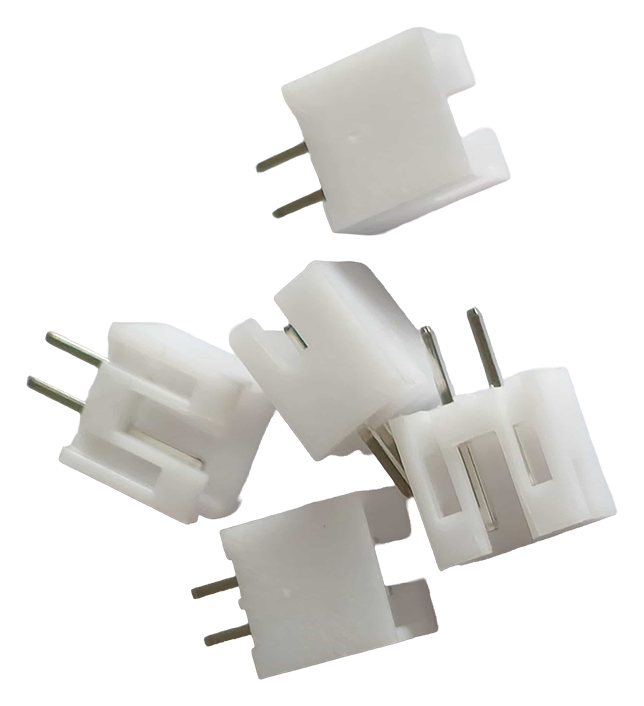
Batteries come with various connectors; the antweight standard is JST PH 2.0, which is exactly what our ESCs and receivers use. We sell JST PH 2.0 connectors in packs of five, so you can re-terminate a pack or make an extension from 26 AWG silicone wire. Unlike PVC, silicone insulation does not melt against a hot motor and tolerates bending.
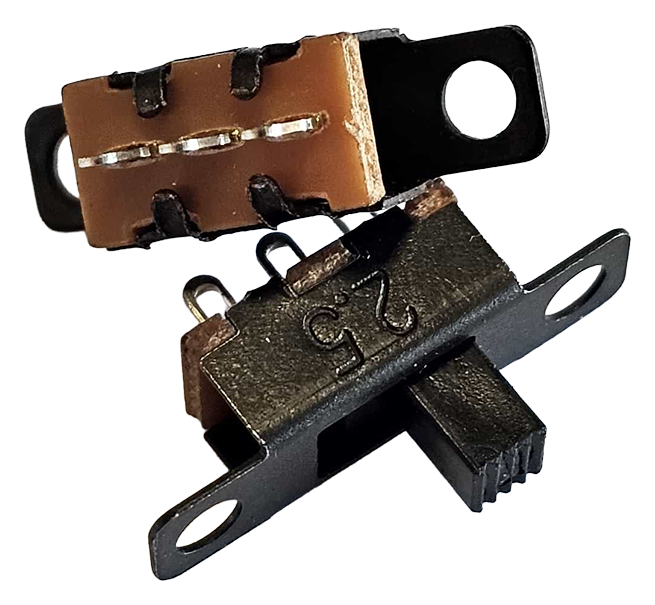
Between the battery and the ESC goes an externally accessible switch – rule 5.2 requires it and the tech check tests it. Rate the switch for the robot’s current: the SS12F15VG4 slide switch handles 1.5 A continuously; for spinners use a higher-rated switch or a removable link (the rules explicitly allow it). Leave the balance connector (the white three-pin JST-XH on a 2S pack) accessible so the pack can be charged without opening the robot.
Charging within the rules
Rule 3.3 of the CCRL rules says: charging must not be left unattended and must take place near a fireproof container or bag. In practice that means three things:
- A balance charger. The 2S LiPo charger charges each cell separately to 4.2 V through the balance lead. Charge at 1C – 450 mA for a 450 mAh pack; faster charging shortens the pack’s life.
- A LiPo bag. The safety bag is a fireproof pouch where the pack belongs during charging, transport and storage. Organisers check for it at tournaments.
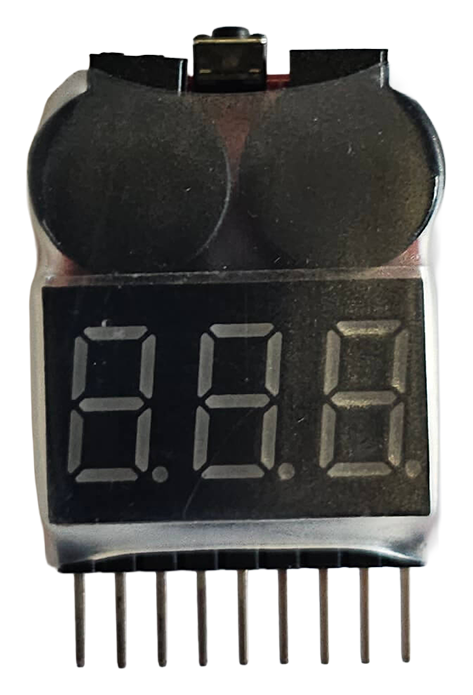
- Supervision and measurement. Charge where you can see the pack, and before each fight check every cell with the tester. A difference of more than 0.05 V between cells means the pack is ageing.
Never charge a pack that is warm from a fight, puffed or has a damaged wrapper. Let it cool down first; retire a puffed one.
Storage and lifespan
LiPo packs are happiest at a storage voltage of 3.8 V per cell (7.6 V for 2S). A fully charged pack left in a drawer for weeks ages several times faster; a deeply discharged one (below 3.0 V per cell) often never recovers. After the season, discharge or charge the packs to storage voltage, keep them in the LiPo bag at room temperature and check them with the tester every two months.
Treated this way, a good 2S pack lasts 100–200 cycles – several seasons of an antweight robot. Signs of the end: puffing, a fast voltage drop under load and cells drifting apart.
Battery voltage, ESCs and servos
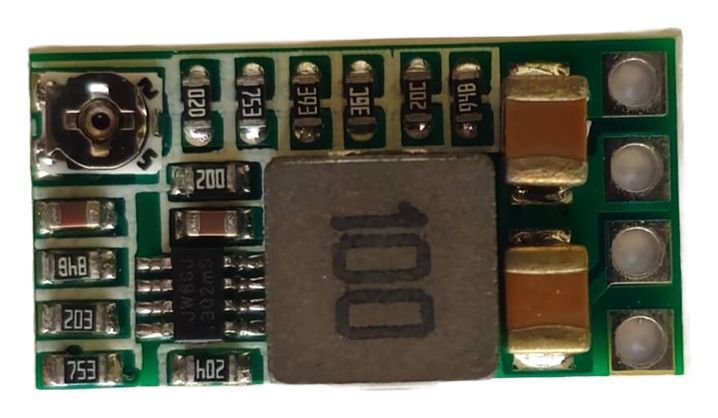
Drive and weapon run straight from the 2S pack: dual DC ESCs and the Malenki Nano HV are designed for 2S. Watch the servos: the SG90 and MG90S want 5 V, so they need the adjustable BEC at 29 CZK or a 5 V feed from the receiver if the ESC provides one. The PTK servo tolerates 8.4 V and runs straight from the pack. How the whole chain battery → switch → ESC → motors is wired is shown in How a combat robot works.
Safety checklist for the pits and at home
- Packs outside the robot are in a LiPo bag.
- I charge only under supervision, at 1C, with balancing.
- Before a fight: tester, every cell above 3.9 V.
- After a fight: let the pack cool down, inspect the wrapper.
- A puffed or punctured pack is retired and taken to a collection point.
- At home I store at 3.8 V per cell, not fully charged.
The charger, tester and bag ship within 1–2 working days across Europe – details on the Shipping & payment page.
Frequently asked questions
How long does a battery last in a fight?
A fight lasts a few minutes and a pusher with N20 motors gets several fights out of one 450 mAh pack. A spinner drains it much faster because spinning the weapon up draws the most current. Measure the voltage with a tester between fights and swap the pack below 3.7 V per cell.
How many batteries should I bring to a tournament?
Two or three. One is in the robot, one is charged and ready, the third is charging. Charging between fights happens under supervision and inside a LiPo bag, as the rules require.
Can I use a 1S battery?
Technically yes, but N20 gear motors are rated for 6 V and at 3.7 V you lose half the power; that is why most antweight robots run 2S. 1S needs special ESCs and motors we do not stock.
What is balance charging and why does it matter?
A 2S pack has two cells in series and the charger, through the balance connector, charges each one separately to 4.2 V. Without balancing the cells drift apart, one gets overcharged and the pack ages or puffs. Our 2S charger balances automatically.
Why don't you sell batteries?
Lithium batteries come with special shipping and storage requirements that a small e-shop cannot meet sensibly. Buy them from RC hobby shops with a verified origin; everything else – charger, tester, bag, connectors and wires – is in our shop.
How do I dispose of an old or puffed battery?
Discharge it slowly (with a bulb or the charger's discharge function) to the minimum, tape the terminals and hand it in at a battery collection point or recycling centre. Never put it in household waste and never puncture it.