


Combat robots according
to their mode of movement
The way your robot moves defines its agility and strategic options in the arena. A reliable chassis is an absolute must, but unconventional solutions such as walking mechanisms can give you a valuable bonus to the weight limit.
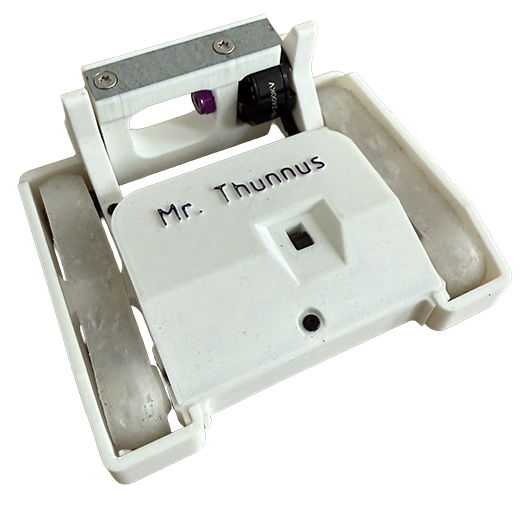
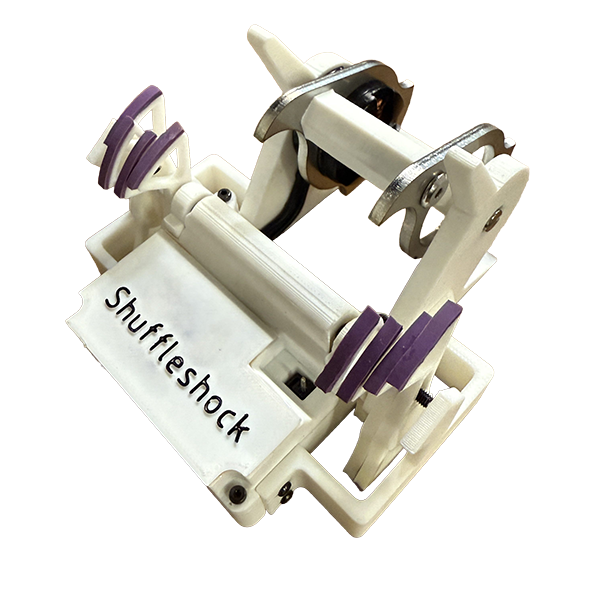
Robots must always move in some way, and their movement can be classified into one of three categories: traditional, non-traditional, and walking. Because we support diversity, we grant a weight bonus to walking robots and robots with non-traditional movement. Weight bonuses are summarized in the following table:
| Movement Type | Weight Bonus |
| Traditional | 0% |
| Non-traditional | 50% |
| Walking | 100% |
Traditional Movement
The CCRL classifies traditional movement as any robot that relies on the rotational movement of a component in contact with the ground as a means of propulsion or orientation within the arena. This includes all forms of wheels (round, non-round, spoked, or offset-axis), even if these wheels are parallel or nearly parallel to the arena floor. This also includes systems with continuous tracks, belts, or belt drives. It also encompasses vertical or nearly vertical rotating shafts that make contact with the ground, such as live weapon shafts or similar structural elements.
Non-traditional Movement
Any robot that does not fall under the definition of a “traditional movement system” qualifies for the non-traditional movement bonus. Non-traditional movement systems must not use unpowered rotating objects (wheels, drums, rollers, ball bearings, etc.) as a means to reduce friction against the ground. They are also prohibited from using powered or unpowered wheels or wheel-like structural elements to facilitate turning or orienting the robot in the arena. This requirement applies even if the robot is inverted or in an orientation different from its starting orientation.
Examples of non-traditional movement include:
-
Cam mechanisms (shuffler robots)
-
Bristle-bots
-
Flying systems
-
Gyroscopic precession
-
Momentum reaction
-
Jansen mechanisms
-
Hovercraft
True Walking Movement
True walkers are robots with one or more legs that allow them to move across the arena. Legs are defined as articulated structural elements that make contact with the arena floor and can move with two or more degrees of freedom. To qualify as a true walker, the robot’s movement must not be possible solely through the continuous rotation of one or more motors. True walkers must also meet all requirements for non-traditional movement.
Competitors wishing to utilize the true walker bonus are encouraged to have their design approved by CCRL staff before registering their robot, as CCRL reserves the right to approve or deny the true walker bonus to any robot at its own discretion.
Movement Types
- Traditional Movement – wheels, tracks and other rotational mechanisms with no weight bonus.
- Non-traditional Movement – cam mechanisms, hovercraft and other unconventional solutions with a 50% weight bonus.
- True Walking Movement – jointed, leg-walking robots that earn a 100% weight bonus.
Your mode of movement is closely tied to your choice of weapon and weight category. Take a look at the weight categories and weapon types for combat robots, or return to the overview of all combat robot types.
Turn your ideas into reality with our components. You will find everything you need to build your champion in our e-shop.